
Access is the mission
15 de junio de 2026
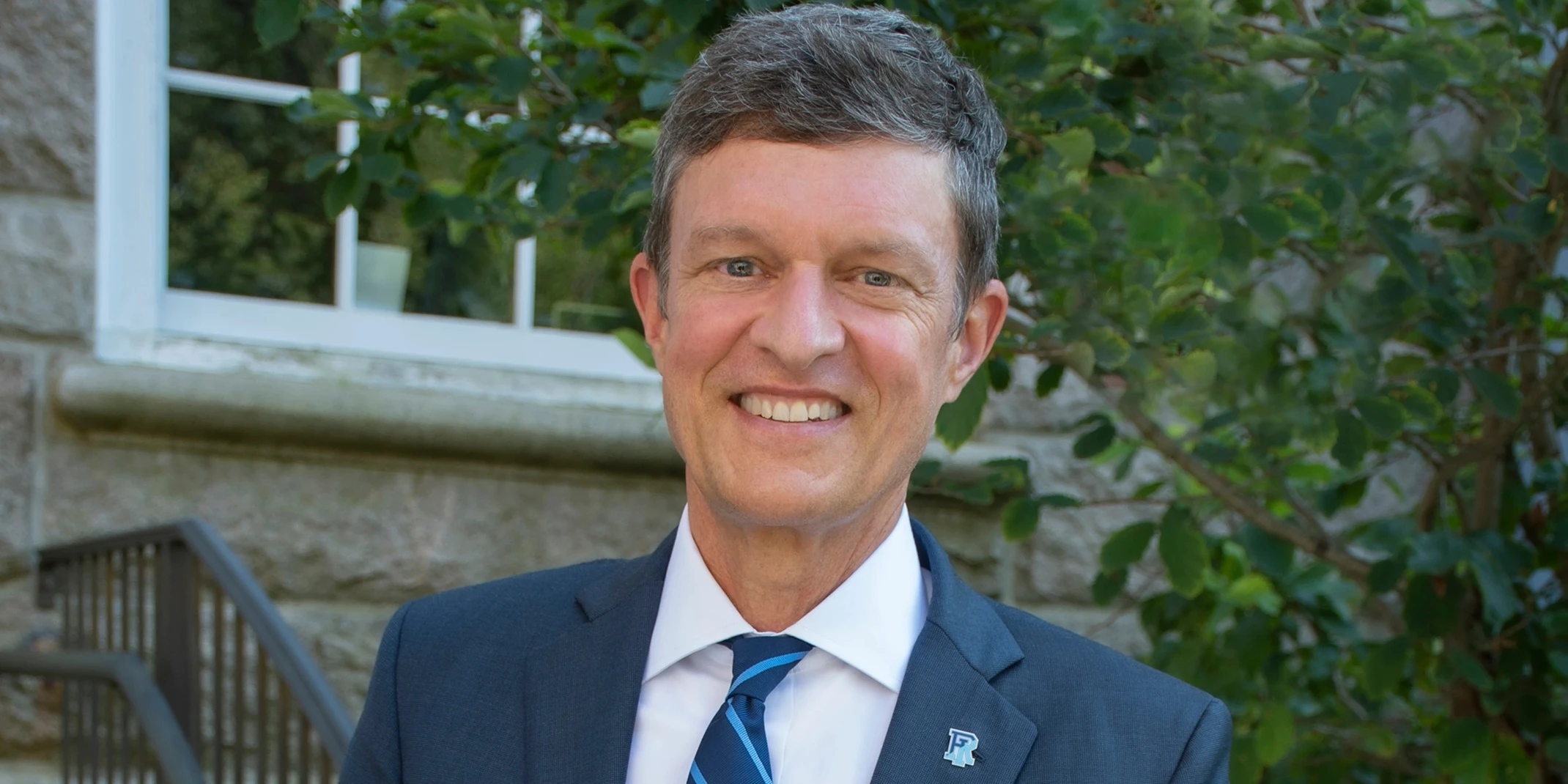
Por Dr Marc Parlange
Low-income and working-class Americans are being left behind, and higher education, which should be one of the country’s strongest engines of upward mobility, is too often reinforcing the divide instead of narrowing it.
For many Americans, college still represents opportunity. But for a growing number of families, it has become harder to justify: expensive, uncertain and increasingly out of reach. That burden is felt most heavily by those with the fewest resources.
I see this at the University of Rhode Island every admissions cycle. Students are admitted, want to attend, and in most cases are academically prepared to succeed. While location, campus life and academic fit are main drivers of attendance, increasingly these factors do not outweigh the financial realities families face. And we are not the only institution experiencing this.
Resetting the playing field
Nationally, college enrollment has been declining for years, and affordability is a major reason. Many students apply to college and far too many ultimately leave¾more than 43 million Americans have attended college but never completed a credential, because they can not afford to continue or are unwilling to shoulder the mountain of debt it would require. Compounding the issue is the shift we have seen over the years in favor of those who have stronger K-12 schools, access to tutoring and test preparation, college counseling, enrichment opportunities and the financial security that allows families to avoid crushing debt. Talent is distributed broadly across society, but opportunity is not. By the time students apply to college, the playing field is already uneven.
At URI, consistent with our land-grant mission, we admit every qualified Rhode Island student who applies. But we also see, very clearly, that students arrive with vastly different levels of preparation and support. Many need additional work in math before they are ready for college-level coursework. That is not a reflection of ability or potential. It is the reality of the widening disparities in the systems students move through before they reach our campus.
A shift in mobility
This shift is part of a broader national pattern. Compared with other advanced economies, the United States has higher rates of poverty and lower levels of upward mobility across generations. In many countries, it can be easier to move from lower-income circumstances into the middle class. In the United States, where a person starts in life still plays an outsized role in where they end up.
That reality is especially troubling because the American research university remains one of our nation's greatest strengths and one of its most influential contributions to the world. Having worked in higher education systems in Australia, Canada and Switzerland, I have seen firsthand how deeply respected the U.S. model remains. Its combination of research, innovation, academic freedom and entrepreneurship is unmatched.
At the same time, many of those countries invest more heavily in higher education, resulting in lower tuition costs and less student debt. They have made a deliberate public investment in higher education as broadly accessible infrastructure that serves the public good.
The quality of the U.S. system is not the problem. The problem is that the opportunities our universities open up are increasingly available only to a select minority of our citizens.
Inequality and economic reality
Costs have risen faster than wages. Housing, health care and education have all become more expensive. In Rhode Island, rent for a two-bedroom apartment averages more than $2,300 per month. Childhood poverty in the state exceeds the national average. Financial aid has become more complex and, in some cases, less predictable or less accessible. Families are being asked to make decisions with less certainty and higher stakes.
At the same time, the most visible institutions in higher education have become increasingly concentrated and elite. A small number of institutions command enormous resources, attract global attention, and shape public perceptions of the entire sector.
Recent legal challenges have raised serious questions about how some of these institutions operate. A group of highly selective universities agreed to hundreds of millions of dollars in settlements related to allegations that they coordinated financial aid practices in ways that disadvantaged students. Their admissions practices have also been scrutinized over the years. This reinforces a broader concern: Access to higher education is not determined solely by merit. From the outside, the highest tiers of education can appear less like a pathway to opportunity and more like a closed loop in which advantage circulates among those who already have it.
That perception reflects a broader economic reality. Recent federal policy proposals have targeted programs that many lower-income families rely on, including SNAP and Medicaid, even as higher earners continue to benefit disproportionately from economic growth and tax policy. The result is a widening gulf between those who are prospering and those who are struggling to make ends meet.
Public universities such as URI were created to address this through expanded opportunity—to democratize access to education and give people a real chance to get ahead. That mission remains the reason these institutions exist.
The possibility of change
In 1968, in the aftermath of the assassination of Dr. Martin Luther King Jr., URI established the Talent Development Program. It was a direct response to inequality and a recognition that talent exists everywhere, even when opportunity does not.
The program provided students from historically underserved areas of Rhode Island with not only a pathway into the university, but also the resources needed to succeed once they arrived—academic advising, mentorship, community and a structure focused on persistence and graduation. At its core, Talent Development recognizes that access alone is not enough. Students must also have the support necessary to thrive.
Last year, URI graduated its 5,000th student from the program.
Thousands of lives have been transformed. Graduates have built careers, supported families and contributed to their communities. Many are first-generation college students, and most remain in Rhode Island after graduation, working in fields that are essential to the state's future.
Today, Talent Development stands as a successful national model for what is possible. It also highlights what is at stake.
Access to higher education in the United States depends heavily on financial aid. Pell Grants, Parent PLUS loans and graduate lending programs allow students without means to enroll and succeed. If those programs are reduced or restricted, students will be forced to take on more debt, work jobs concurrently with attending school, or decide not to attend college at all.
So if education is the great equalizer, what can we do?
First, measure institutional success differently. For too long, exclusivity has been treated as a proxy for excellence. It is not. A better measure is who institutions serve, who they graduate and whether those graduates experience meaningful improvements in their lives. The Wall Street Journal rankings place significant weight on outcomes such as graduate salaries, social mobility and return on investment. Under that methodology, URI was ranked the top public university in New England for the second consecutive year — not because we are the most selective, but because we have effectively given access to and supported students who needed a step up in life.
Second, increase affordability. Financial aid remains essential, but it cannot bear the entire burden. When tuition rises faster than families can manage, access narrows regardless of how aid is structured. Institutions, states and the federal government all have a role in keeping higher education within reach.
Third, build support systems. Talent Development succeeds because admission is only the first step on a student’s journey. The program provides structure and support through graduation. URI has expanded that philosophy through summer readiness and bridge programs that help students who need additional preparation before the academic year begins. The goal is not remediation for its own sake. It is to give students the foundation and confidence necessary to succeed once they arrive in the classroom.
Fourth, expand potential pathways. Not all students follow the same route into higher education. Strong partnerships with community colleges, dual-enrollment programs and flexible entry points, including for adults who started but did not finish their education, can widen access without lowering standards.
Finally, align academic programs with public need. Workforce shortages in areas like healthcare, education, city planning and engineering are directly connected to access. When fewer students can afford to enter these fields, shortages follow. Institutions that align educational opportunities with workforce needs can address both challenges at once. In Rhode Island there is a critical shortage of primary care providers. URI is actively exploring a medical school focused on primary care education, an effort that would both broaden educational opportunity for Rhode Island students, specifically, and help address the state's current healthcare crisis.
This is not about diminishing excellence. It is about broadening it.
The United States does not lack talent. What we lack are pathways that reach it. More than 50 years ago, URI made a deliberate decision to expand access to a college education. That decision did not solve the problem, but it changed the lives of thousands of students.
The gap between those with resources and those without continues to grow. Higher education did not create that dynamic, but it has both the capacity and the responsibility to address it. We must be willing to meet that responsibility with the urgency it requires.
Not Alone: Leaders in conversation is a collaboration between Elsevier and Prof Rafael Bras. We bring unfiltered perspectives on global issues by research and academic leaders.
Follow Not Alone for more contentopens in new tab/window on your preferred platform, and never miss a new episode.
Contribuidor
DMP
Dr Marc Parlange
President, University of Rhode Island